
We’ve dashed through to the end of the year and we’re even walking in a winter wonderland in Washington, DC this December. This edition of Audit Committee Insights is filled with resources released by stakeholders. Oh, what fun! We’re comin’ to town with the latest collection of regulatory updates, stakeholder resources, and hot topics on the horizon to keep audit committees in the know this holiday season. Read on to learn about what’s new.
We welcome input; please let us know what you think. Subscribe here so that you never miss an update from the CAQ.
In This Issue:
- It’s the Most Wonderful Time of the Year: CAQ Releases the 2025 Audit Committee Transparency Barometer
- PCAOB Board Member Christina Ho Announces Departure
- AI in the Boardroom: Insights for Company Oversight and Committee Operations
- Emerging Technology: What You Need to Know About Quantum Computing
- Three Ways Audit Committees Can Foster a Culture of No Tolerance to Fraud
- CAQ’s Audit Committee Council Spotlight: Sandra Helton, Former Audit Committee Chair OptiNose, Inc.
- ICYMI: CAQ Public Policy Technical Alert (PPTA), October/November 2025
- Rockin’ Around the Dinner Table: Festive Food for Thought
It’s the Most Wonderful Time of the Year: CAQ Releases the 2025 Audit Committee Transparency Barometer
The 12th annual edition of our Audit Committee Transparency Barometer is here and together with Ideagen Audit Analytics, we analyzed public company audit committee disclosures of companies in the S&P 1500. The report includes data from the 2025 analysis, examples of good disclosures, a sample leading practice audit committee matters and report, and questions to consider when preparing audit committee disclosures.
Here are the 2025 key findings:
- 90% of S&P 500 companies disclosed the board of directors’ skills matrix, an increase from 85% in 2024. S&P MidCap companies (80%) and S&P SmallCap companies (70%) also showed slight increases.
- 65% of S&P 500 boards disclosed they have a cybersecurity expert—representing a 5-percentage point increase from 2024.
- Stagnation and decline of audit committee disclosures (for S&P 500 companies) were observed across several measures, including: disclosure of the annual evaluation of the external auditor (decreased from 39% to 38%); considerations in appointing or (re)appointing the external auditor (remained flat at 50%); and factors contributing to the selection of the audit partner (decreased from 17% to 16%).
As the role of the audit committee continues to evolve, and disruption in the landscape persists, it is essential to maintain robust disclosures. We encourage audit committees to take advantage of the opportunity proxy statements provide to disclose how the audit committee is fulfilling its oversight responsibilities.
Read the findings and dive into the examples here. We’re interested in hearing from you about the Barometer. After you’ve read through the Barometer, please take a few minutes to answer a brief 5-question survey.
PCAOB Board Member Christina Ho Announces Departure
On December 1, Board Member Christina Ho announced that she would leave the PCAOB by the end of January 2026 after more than four years of service. Board Member Ho currently fills one of the two CPA seats on the board. Read her full statement here.
AI in the Boardroom: Insights for Company Oversight and Committee Operations
The CAQ’s new resource The Role of the Auditor in AI: Present & Future, provides new questions for boards to consider in their AI oversight. If your audit committee is charged with the responsibility of oversight of AI, this is a must read. The resource also suggests questions regarding the current state of AI in the company, strategic objectives related to AI trust and transparency, and how the company plans to achieve those objectives.
Deloitte echoes these focus areas in their newest resource Agile AI governance in the boardroom which summarizes the highlights and actionable guidance from interviews with nine board members across a wide variety of industries, focused on AI governance.
In addition to considering the company’s responsible use of AI, have you considered how to responsibly implement AI within boardroom operations? PwC has many ideas on how to integrate AI into board processes and workflows. Here are a few:
- Put AI use in the boardroom on the agenda: Boards should formally include AI use as an agenda item to facilitate thoughtful discussion about how directors are currently leveraging AI. This discussion could include whether AI will be used for generating queries, performing scenario modeling, drafting minutes, or even serving as a virtual observer during meetings.
- Enable secure AI use: Any board-related use of AI should occur within a secure, company-approved environment. Use of personal or public platforms can create significant issues in the tracking and documentation of the board’s activities.
- Maintain human oversight: Outputs from AI carry the risk of “hallucinations” or outputs that sound plausible but lack factual basis. There should always be “humans in the loop” and decision-making should consistently remain with directors.
- Prepare for investor transparency: As AI becomes a more prominent tool in board decision-making, investors may begin to ask how it is being used in governance processes. The board should be prepared to articulate its approach, including how AI informs oversight.
Emerging Technology: What You Need to Know About Quantum Computing
There’s no doubt that advancements in AI are at the forefront of the minds of those charged with governance, but quantum computing is following close behind – or it should be. While classical computers use bits (a code of zeros and ones) to process and store data, IBM notes quantum computing uses qubits which behave like a bit and store either a zero or a one. Qubits can even be a weighted combination of zero and one at the same time.
This unlocks immense potential to revolutionize performance, efficiency, reliability, sustainability, and more across industries with quantum computing vendors projecting tangible business benefits by 2030. PwC highlights several specific use cases in their resource Quantum computing: How businesses can prepare for the future and Deloitte explores four potential scenarios companies should consider to help leaders prepare their quantum computing readiness strategy.
This advancement doesn’t come without risks. An article from Grant Thornton suggests quantum computing will be able to break common encryption methods used for cybersecurity and data privacy within the next few years. Although boards don’t need to become quantum experts, Directors & Boards suggests they should be prepared to be knowledgeable and conversant in quantum computing by the end of 2026. Oversight of quantum risk, starting with related cybersecurity risks and data retention, may become a responsibility of the board in the future.
With audit committees becoming increasingly responsible for the oversight of cybersecurity, this is an emerging area to watch.
Three Ways Audit Committees Can Foster a Culture of No Tolerance to Fraud
Participants in the Anti-Fraud Collaboration’s second Fraud Forum emphasized that with quick advancements in and implementation of technology, it’s even more paramount to maintain a strong ethical culture to effectively deter and detect fraud. The forum was hosted in November in collaboration with the CAQ and convened stakeholders from across the financial reporting ecosystem, including boards of directors. Read the summary of the key themes discussed during the event here.
BDO’s recent article A Practical Guide to the Board’s Oversight of Fraud, echoes the importance of a strong ethical culture and emphasizes the crucial function of audit committees in cultivating one of adherence, honesty and accountability to deter fraud within companies. They suggest three ways audit committees can play a role in setting, maintaining, and promoting a culture of zero tolerance to fraud:
- Be visible and accessible to stakeholders and have protocols for the elevation and communication of information to the board.
- Swiftly and fully address conduct and communications that do not align with the company’s code of conduct or culture. Have a protocol for how these instances are identified and responded to.
- Consistently speak with one unified voice. Establish clear communication roles and responsibilities for interactions with your stakeholders.
CAQ’s Audit Committee Council Spotlight: Sandra Helton, Former Audit Committee Chair OptiNose, Inc.
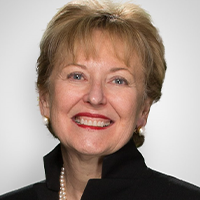
This month we spoke to CAQ’s Audit Committee Council member Sandra Helton about her career and journey to the audit committee.
How did you get started in accounting? What was your first and last job?
In college I majored in math but hadn’t decided on a career path. I decided to pursue a range of skills that struck me as valuable in the job market at the time, so I expanded my studies to include accounting, economics, computer programming, and statistics.
My first role out of college was with Corning Inc., where I worked on a project that moved a product from the research and development (R&D) phase to commercial manufacturing. Because of my accounting background I was given additional responsibilities for the project’s accounting and forecasting needs. It was a wonderful experience that opened the door to many opportunities.
While I have served as an independent director on several public company boards, my last “job” was serving as Executive Vice President and Chief Financial Officer at Telephone and Data Systems, Inc.
What was the first corporate board that you joined? How did you get on that board?
My first corporate board was Lukens Inc., a steel manufacturing company. At the time, I was Senior Vice President and Treasurer of Corning and wasn’t actively seeking a board position. I was approached by a search firm and ultimately joined the board with the full support of Corning’s senior leadership. The company encouraged outside board service for its senior executives, recognizing the value it brought to both professional development and the organization.
What do you enjoy most about serving on the audit committee? How is it different from other board committees?
The audit committee offers a uniquely broad and deep view of the company—both historical and forward-looking—which provides a powerful vantage point to contribute to the company’s success. What I find particularly enjoyable, though, is the opportunity to engage with financial and operational leaders across multiple disciplines. These interactions—both formal and informal—allow for mentoring and relationship-building that extend the committee’s influence well beyond the boardroom.
What else do you do outside of board service?
Spending time with close friends and family, especially my husband Norm, brother and two nephews, is something I deeply value. My interests are wide-ranging but center around new experiences and continuous learning. I enjoy travel, the arts—especially theatre, music, and visual art—and exploring new food and cultures. I also love reading and I participate in literary groups. Staying curious and engaged keeps me energized, both personally and professionally.
What trends or risks do you think audit committees will need to focus on in the next few years?
A few years ago, this was a far simpler question. Today, the landscape is increasingly complex and fast-moving. Technology, particularly AI and AI-driven cybersecurity, continues to top the agenda. Equally critical is talent and ensuring that organizations have the skills and leadership needed to adapt to technological and structural change and thrive. In parallel, audit committees will also need to stay alert to a rapidly shifting regulatory environment, evolving interpretations of laws, heightened geopolitical tensions, and a less predictable framework for global commerce.
ICYMI: CAQ Public Policy Technical Alert (PPTA), October/November 2025
Each month, the PPTA highlights and examines the regulatory, standard-setting, legislative, and broader financial reporting developments impacting the public company audit profession. The CAQ’s October 2025 and November 2025 Alerts included these featured articles.
International Organization of Securities Commissions (IOSCO) Reviews Implementation of Recommendations for Crypto and Digital Asset Markets
The IOSCO published its Final Report on its Thematic Review Assessing the Implementation of IOSCO Recommendations for Crypto and Digital Asset Markets. The review highlights both the progress made in regulating crypto-asset markets and the key areas for continued progress, such as promoting greater consistency in implementation, reducing risks of regulatory arbitrage, and strengthening enforcement practices.
Financial Accounting Standards Advisory Council (FASAC) Meeting Recap: September 18, 2025
The FASB posted the recap of FASAC’s most recent quarterly meeting, held on Thursday, September 18, 2025. At the meeting, the FASB Chair provided highlights on FASB activities, and staff members from the SEC and PCAOB, and the AICPA Auditing Standards Board Chair commented on current issues and activities. Council members also discussed the Agenda Consultation and the Post-Implementation Review — Current Expected Credit Losses.
Rockin’ Around the Dinner Table: Festive Food for Thought
If your household is anything like most, the season’s most spirited debate happens right at the holiday dinner table. Need some conversation starters to keep things merry and bright? Here are a few to spark friendly debate:
- When is it okay to start playing Christmas music? After Halloween, after Thanksgiving, beginning of December, or all year round?
- When should you start decorating for the holidays? After Halloween, after Thanksgiving, or beginning of December?
- Are colorful lights, or white lights better? And what about size, big or small lights?
- When should the family open presents? All at one time or one person at a time?
- Are you team real Christmas tree or artificial?
- How do you feel about family holiday letters? Sweet or tacky?
A surprising omission from this article, is the eternal debate: Is Die Hard a Christmas movie (or not)?
Let the merry mayhem begin— we wish you a happy and healthy holiday season!
Questions and comments about Audit Committee Insights can be addressed to Vanessa Teitelbaum, Senior Director, Professional Practice (vteitelbaum@thecaq.org).
This newsletter is intended as general information and should not be relied upon as being definitive or all-inclusive. The CAQ encourages readers to refer to applicable rules, standards, guidance, and other resources in their entirety. All entities should carefully evaluate which requirements apply to their respective organizations.