Spring is officially here, and the cherry blossoms are blooming in full force here in the nation’s capital. March is a busy one. Chairman Atkins has been on the Hill, the PCAOB announced a new fellowship program, and the CAQ has been putting out resources that are well worth your time. In this edition, we explore the evolving role of the auditor in an AI-driven world, shine a light on the indispensable role of whistleblowers in fighting fraud, and share the latest from the CAQ on digital assets and investor trust. Read on for what I’m tracking.
Please note that these perspectives are my own. If this email was forwarded to you, subscribe here so that you never miss a public company auditing update.

Chairman Atkins Testifies Before Congress
In February, SEC Chairman Paul Atkins testified before both the House and Senate, offering a comprehensive articulation of the Commission’s regulatory agenda under his leadership. Consistent with prior statements, Chairman Atkins emphasized the importance of a principles-based approach to regulation, one that prioritizes clarity and efficiency for market participants while preserving investor protections. His testimony touched on the ongoing review of Regulation S-K, the Commission’s engagement with digital assets, and the role the SEC plays in supporting well-functioning capital markets. The CAQ will continue to monitor and engage with the Commission as it advances these priorities.
Read the full testimony here.
PCAOB Announces New Audit Practitioner Fellowship Program
The PCAOB recently announced a new Audit Practitioner Fellowship Program designed to bring experienced audit practitioners into the Board’s work on a temporary basis. The program reflects a recognition that practitioners with real-world experience in conducting public company audits can provide a valuable perspective as the Board develops and refines its standards and oversight activities. This kind of practitioner engagement is something the CAQ has long supported, and we welcome the opportunity this program creates for the profession to contribute meaningfully to the PCAOB’s mission.
Learn more about the program here.
PCAOB Announces Open Meeting
The PCAOB will hold an open meeting on March 31 to consider issuing a formal request for public comment on the Board’s future strategic priorities. The meeting will take place in the PCAOB’s Multi-Purpose Room (301) at 1666 K Street NW, Washington, DC. The public may also view the meeting via a livestream on the PCAOB’s event page, and a recording will be available after the meeting concludes.
Commissioner and Staff Remarks at SEC Speaks
At the 2026 SEC Speaks conference, the Commission signaled a strategic pivot toward a materiality-first disclosure framework. Key discussions led by the Chairman and Commissioners centered on their current initiatives and future priorities. With a materiality-first mindset, they are considering changes in disclosure requirements, rulemaking, and enforcement. Senior staff from the Office of the Chief Accountant (OCA), Division of Corporation Finance (CorpFin), and the Division of Enforcement shared their current initiatives and goals for changes to oversight of the PCAOB, independence rules, the impact of AI on the profession, digital assets, semi-annual reporting, and enforcement.
We look forward to our continued engagement with the SEC commissioners and staff as they move from discussion to formal policy.
The Audit Effect: The Evolving Role of the Auditor
The Newest Episode of the Capital Markets Pulse Podcast is Here!
The latest episode of the CAQ’s Capital Markets Pulse podcast explores the state of the profession today: the pressures, the opportunities, and the enduring importance of the independent audit in maintaining trust in the capital markets. I had the pleasure of joining this discussion and shared my views on what 2026 entails, along with our Vice President of Operations and Talent Initiatives, Liz Barentzen. Our conversation focused on how firms are adapting their approaches to audit quality in a period of significant technological and regulatory change, and the future of the talent pipeline. Whether you are a practitioner, an investor, or an audit committee member, this is a conversation worth hearing.
AI and the Audit: Enhancing Investor Confidence
In an Audit in Action blog, Trevor Barton at Deloitte explores how the integration of artificial intelligence is reshaping the audit, not by replacing professional judgment, but by augmenting it. The blog examines how AI-powered tools are enabling auditors to analyze broader and deeper data sets, identify anomalies with greater precision, and devote more attention to high-risk areas. Trevor underscores that the value investors derive from the audit through confidence in the reliability of financial information is not diminished by AI but rather enhanced by it. At the CAQ, we believe this kind of thoughtful, transparent engagement with emerging technology is exactly what the profession needs to demonstrate its continued relevance and value.
Fighting Fraud
Spotlight: The Whistleblower’s Role in Fighting Fraud
A recent article in the Association of Certified Fraud Examiners (ACFE)’s Fraud Magazine profiles Noelle Webb, whose decision to come forward about fraud at her pharmaceutical employer illustrates both the courage whistleblowing requires and the critical function it serves in the financial reporting ecosystem. Webb didn’t set out to become a fraud story. She set out to do the right thing — and her account is a reminder that fraud is often detected not by systems or algorithms, but by people who are willing to speak up.
The numbers reinforce the point. According to the ACFE’s Report to the Nations, tips, most of which come from employees, are consistently the most common way that occupational fraud is detected, accounting for 43% of cases. Whistleblowers serve as a vital line of defense, catching misconduct that can be hard to detect.
This reaffirms that fighting fraud is the shared responsibility of all members of the financial reporting ecosystem. As a member of the Anti-Fraud Collaboration, we are committed to supporting the resources, culture, and mechanisms that make it possible for individuals to speak up and to be heard. Visit the Anti-Fraud Collaboration for the latest tools and guidance.

Bringing Trust to the Digital Asset Ecosystem
As public companies continue to expand their engagement with digital assets, the role of the auditor in this space has never been more important, or more complex. Our latest blog, Bringing Trust to the Digital Asset Ecosystem, examines how auditors are stepping up to provide assurance and transparency in a market that investors are watching closely. From custodial risk to valuation challenges, Erin Cromwell, our Senior Manager of Professional Practice, covers the key areas where audit expertise is making a difference and where further guidance is still needed. Read on and get the latest on the current digital asset landscape.
Institutional Investor Survey Report
The CAQ’s Annual Institutional Investor Survey offers fresh data on how institutional and retail investors view the public company audit’s value, limitations, and expectations for the future. Now in its second year, the survey of 300 institutional investors spanning investment banks, pension funds, insurance companies, and more reveals that confidence in the audit remains strong: 90% of respondents rely on audited financial statements to a great extent when making investment decisions, and 91% trust their accuracy.
At the same time, investors are clear-eyed about what sustains that trust, namely, auditor independence, regulatory oversight, and continued innovation. Nearly 90% of investors say it is very important for auditors to continue integrating new technologies like AI to improve audit quality. The findings offer important insights for audit practitioners, audit committee members, and policymakers alike, and reinforce the importance of continued investment in audit quality and transparency. In an Audit in Action blog, my colleague, Amy O’Connor, Vice President of Public Affairs, unpacks what these findings mean and shares her thoughts on how the profession can navigate the next chapter of trust and market credibility.
Download the full report here.
Accounting+ Annual Report
The talent pipeline is an ongoing challenge facing the profession, and the CAQ’s Accounting+ Annual Report demonstrates the considerable progress we made last year in reshaping student perceptions of accounting. Our research shows that students are influenced by early, targeted outreach, and our in-person and digital engagement efforts have driven meaningful shifts in awareness, interest, and understanding of accounting careers.
Last year, the initiative reached 261,000 students through classroom engagement and grew its subscriber base by nearly 40%. Crucially, the campaign has moved the needle where it matters most: accounting enrollments now outpace overall enrollment growth across all demographics.
Among students reached through classroom programming, 34% reported increased interest in accounting careers. With 72 partner organizations now in the network and a strategy built around meeting Gen Z students where they are, Accounting+ has built the foundation the profession needs for the long term. Learn more about its impact.

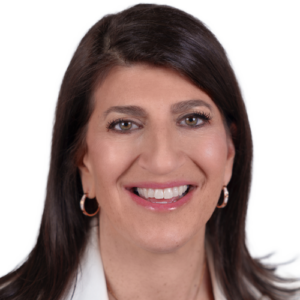 This month I sat down with Lara Abrash, Chair of Deloitte US and Chair of the CAQ Governing Board, to hear her thoughts on leadership, trust, and the evolving role of the audit.
1. When you think about audit quality in 2026, what does “getting it right” look like?
Getting audit quality right in 2026 means consistently delivering trustworthy services in an environment that is becoming ever more data driven. It’s about combining professional skepticism and judgment with technology-enabled insights like generative AI not just for efficiency, but for strengthening our gatekeeper role by continually raising the bar on quality.
Importantly, quality is not a point-in-time outcome; it’s a system of continuous improvement, embedded in how we train our people, how we execute audits, and how we hold ourselves accountable. Ultimately, “getting it right” means that investors, audit committees, and regulators can rely on our work to support confidence in financial reporting and the capital markets.
2. What are you paying the closest attention to right now when it comes to trust in capital markets, and where do you think the audit profession can have the biggest impact?
Rapid technological change, shifting regulatory expectations, demands for transparency, and intensifying global competition are all contributing to unprecedented complexity in our capital markets. The audit profession’s biggest opportunity is to lead in these areas of complexity by bringing clarity, consistency, and independence where it matters most. At its core, our role hasn’t changed: we are stewards of trust. But how we deliver on that responsibility must continue to evolve alongside the markets we serve.
3. Looking back on your own career path, what experiences most shaped your leadership approach and how has your definition of “stewardship” changed over time?
Early in my career, stewardship meant delivering high-quality work and serving clients well. Over time, it has expanded to mean leaving the profession stronger than I found it. Today, stewardship is about investing in talent, advancing innovation, and fostering a culture where people can bring their authentic selves to work. It’s also about recognizing that leadership is not individual; it’s about empowering others and creating lasting impact beyond your own tenure.
4. For the next generation entering audit and assurance, what do you hope they feel energized about?
I hope the next generation feels energized by the purpose of what we do, our role in supporting trust and confidence in the capital markets. This is a profession with a long history of adapting to capital market needs, embracing technology and innovation, which creates incredible opportunities to do more meaningful, insight-driven work.
I also hope they feel empowered to shape the future of the profession by bringing new ideas, new perspectives, and a commitment to continuous learning. Most importantly, I want them to experience the same sense of fulfillment and impact that many of us have found in this profession.
Dennis McGowan
Vice President, Professional Practice and Anti-Fraud Initiatives